



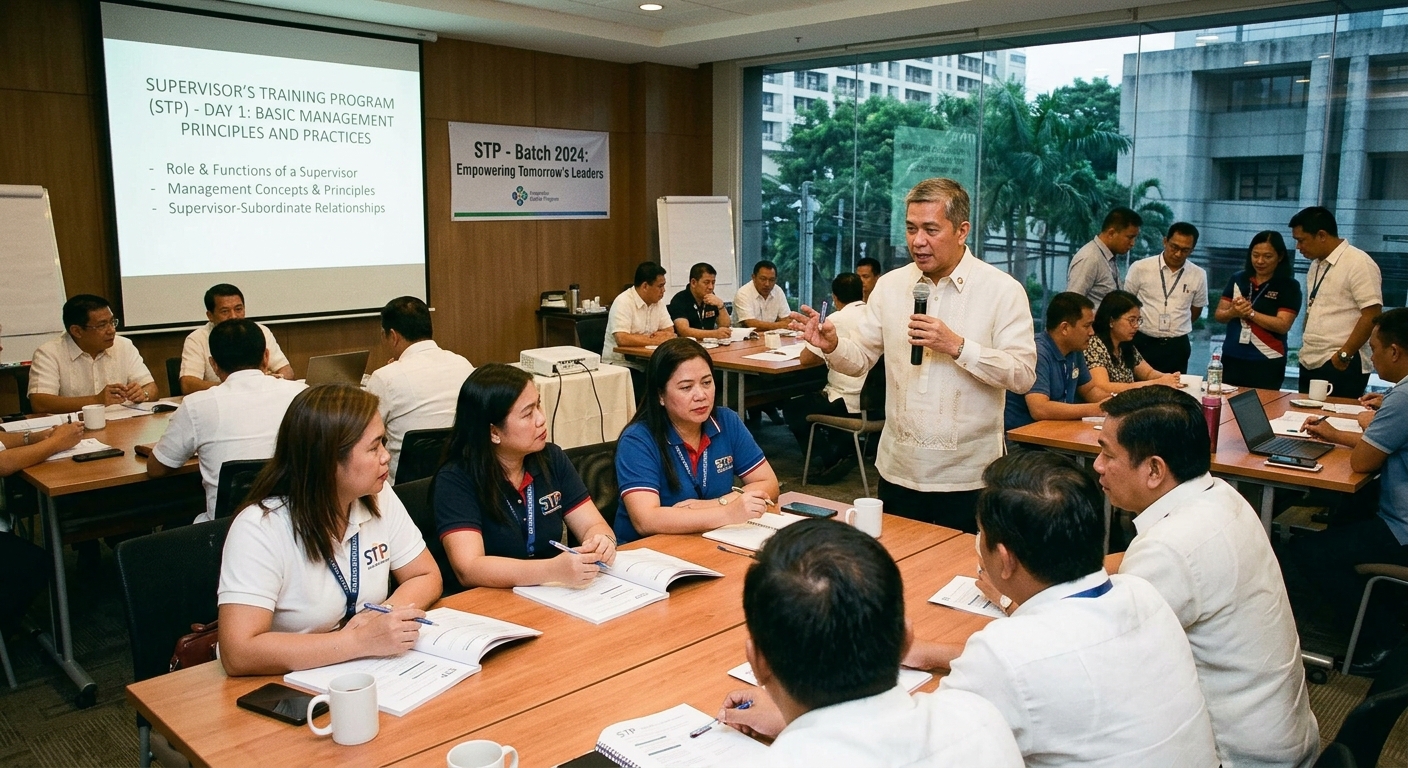
Supervisor’s Training Program (STP)
It is a good practice for companies to promote supervisors from the ranks especially if such is supported by training and development. On-the-job coaching is excellent for gaining management experience but the newly promoted supervisors ought to learn management principles and concepts as well.
This course is designed for supervisors or those who are about to assume roles as supervisors. It will equip them with certain managerial techniques and years of solid supervisory experience backed up by proven management principles and practices. It includes exercises designed to draw from them day-to-day supervisory problems and coach them tools to meet these problems effectively.
Objectives: At the conclusion of the course a participant is hoped to be able to:
- Identify the role and functions of the supervisor and his/her relationship with superiors, peers and subordinates.
- Analyze and discuss basic management concepts and principles on supervision as they are applied in practice.
- Assess the effectiveness of his/her supervisory skills against the tools and techniques of supervision he/she will have learned.
- Practice with conscious effort positively validated & newly acquired supervisory skills.
Agenda:
I. What Is Management/Supervisory Work?
- The four manageriall functions: planning, organizing, leading, and controlling
- Totall system view of the organization
- Characteristics of a successfull manager: effective, efficient, and ethical
II. The Primary Purpose of an Enterprise
- Customer satisfaction and loyalty
- Customer requirements and expectations
- The role of processes
- Process elements
- Cause-and-effect in processes
III. Planning
- The need for planning
- The Pareto Principle
- Vision and Mission
- Competitive strategies
- Goal-setting, How-how Analysis, and implementation planning
IV. Organizing
- The need for organizing
- The organizational structure
- Authority, responsibility, accountability, and delegation
Leading
- The need for leadership
- The Leadership Grid
- Using Filipino cultural values for effective leadership
- Coaching and counseling subordinates
- Communicating
- Creating and maintaining an effective work team
VI. Controlling
- The need for organizational control
- Three types of control
- Standards
- Budgets and financial controls
Who should attend: Newly Promoted Supervisors and Management Trainees.